In a Post-Truth World, Zionism Is a Danger to Jews Everywhere

There is an interesting paradox that is emerging – a collision of ideas and beliefs within Jewish communities all around the world – two groups competing with one another in the court of public opinion on matters pertaining to political Zionism, ideological Zionism, and Jewish identity. Those in defence of Zionism believe it advocates for a homeland for the Jewish people in the land of Israel (formerly known as Palestine), and Jews in opposition see the movement as racist because of its supremacists overtones. I will briefly give an overview of Zionism and its founders, and why I support the belief that Zionism is a threat to Jewish people.

Zionism is an ethnocentric and Jewish nationalist movement that emerged in the late 19th-century. Its founders, Theodore Herzl and Vladimir Jabotinsky spearheaded the organisation and sought to establish a Jewish homeland through the colonisation of Palestine. Paraphrasing from the Jabotinsky Institute, “Herzl, considered the founder of political Zionism, focused on diplomatic efforts and establishing a Jewish homeland through political means. Jabotinsky, while influenced by Herzl, developed Revisionist Zionism, which emphasised military strength and a more aggressive approach to achieving a Jewish state.” Herzl believed that a Jewish state for a self-determined Jewish people was the answer to widespread antisemitism across Europe. Fast-forward to May 14th 1948, and the modern state of Israel is born through political and military means. Many wept when Ben Gurion, the first Prime Minister of Israel declared Israel an independent Jewish state, especially the native population, i.e., the Palestinian people who were forcibly removed (the Nakba) – some 750,000 expelled without consideration. Others were brutalised and subsequently murdered, and seventy-seven years later, we find ourselves on the precipice of World War III – a consequence of Israel’s ongoing expansion, i.e., the Greater Israel project. 

Unfortunately, it seems that 21st-century social media culture (and society at large) is heading down a slippery post-truth slope, where feelings and ‘personal beliefs’ take precedence over truth, facts, and historical evidence. Here are seven facts to keep in mind: 1) Palestinians are a colonised people (seventy-seven years and ongoing), 2) Jews suffered unimaginable horrors during WWII (Holocaust), 3) Jews were persecuted throughout Europe before the rise of Nazi Germany, 4) Palestinians in Gaza are experiencing an engineered famine which is a war crime (IDF siege and total blockade), 5) Palestinian men, women, and children – their culture, heritage, and identity – are being systematically destroyed by Israeli forces, 6) Palestinians as an ethnic group are being carpet bombed, sniped, droned, and fired upon daily in Gaza, ergo, erased, i.e., a Genocide, and 7) The illegal occupation of the West Bank by Israel is in contravention of the Fourth Geneva Convention, according to International Law. 

Now, with all of the above in mind, I want to focus on media-culture today, specifically the online realm as real and hyper-real spaces that create an almost ‘participatory’ environment between the human being (content consumer) and that which he/she is consuming. Information and content are becoming an extension of the psyche/mind of the content consumer, i.e., the space between the human being and an event (viewed online) is becoming “narrower” by the day. This is not about fiction and reality lines becoming blurred, I am stating that people are becoming more immersed by the materials they view online – whether real, manipulated, or hyper-real. And unlike our predecessors, many people today are experiencing a kind of “main character syndrome”, i.e., an exaggerated sense of self-importance because of social media. Everything is faster and more intense. Personalised, too.

For example, in the 90s, the consumer was a passive observer far removed from the context of a narrative – a space reserved only for media personnel, political figures, and even film stars. Today, however, the human being (content consumer) can insert himself/herself at the centre of an event as creator, lead, publisher, and so on. Since we are witnessing a minute-by-minute update of world events (in real time) on our screens, politicians, media pundits, and even presidents aren’t sparred from being scrutinised and dissected, and this information filters into the real or hyper-real environment of the content consumer. At some point, because of this ‘participatory’ environment, the content consumer will see it as his/her business to get involved, in whatever capacity. 

Since October the 7th, Zionism has been in the spotlight even though its entire existence (according to Israeli scholars) is highly dependent upon secrecy and obscurity. Knowledge of the history of Palestine and the Palestinian people is better understood now by the masses than ever before, from Gen X to Gen Z. Pandora’s box is officially open, and my opinion is that social media has handed power back to the people in means and ways that Zionism is not prepared for. Censorship and mass control, e.g., the acquisition of social media apps like TikTok by Israeli supporter and Zionist billionaire and Larry Ellison, will only fuel the flames of antisemitism. Unfortunately, one of the key negative aspects of this kind of environment is misinformation – which will always seek to undermine institutions dedicated to the truth because it is dependent upon “virality” for survival, regardless of the content. There has been a paradigm shift in terms of how we consume information, and right now, every stereotype about the Jewish people is playing out online, and this in my opinion is a consequence of political Zionism. Political Zionism’s success was built on the tears and blood of a subjugated nation (the Palestinians), and while rogue individuals like Benjamin Netanyahu pander to the far-right in Europe and America to forge alliances for his own political survival, actual neo-Nazis may seize the opportunity to repackage their political agendas, and to the detriment of ordinary Jews.

It is my view that because the ‘content consumer’ is always at the centre of an event rather than a mere spectator, the repercussions today will be more severe, especially for those who choose to stand by idly and not effect change in Israel, i.e., vote to end all hostilities, follow through with the ICC warrants by arresting Netanyahu and associates, disbanding the fascist Likud party, and establishing an actual democracy for all people, similar to post-apartheid South Africa. 

Weapons of Mass Deception: the US And Israel’s War With Iran Is ‘Iraq 2003’ All Over Again

Following the invasion in March 2003 and the swift toppling of Saddam Hussein’s regime, extensive searches by U.S. and allied forces failed to uncover any active WMD programs. The Iraq Survey Group, led by Charles Duelfer, concluded in 2004 that Iraq had ended its WMD programs years earlier and did not possess stockpiles of chemical, biological, or nuclear weapons at the time of the invasion. The absence of WMDs dealt a major blow to the credibility of the U.S. government. It exposed how intelligence had been exaggerated, cherry-picked, and even misinterpreted to fit a predetermined policy agenda. The war, initially framed as a necessary action to disarm a dangerous regime, increasingly came to be viewed as a war of choice built on false pretenses. The use of WMDs as a justification for the Iraq War had far-reaching consequences. Domestically, it led to a significant erosion of public trust in government and media institutions. Internationally, it damaged U.S. credibility and strained alliances, particularly with countries that had opposed the invasion, such as France and Germany. 

In the realm of geopolitics, history rarely repeats itself perfectly. But as tensions between the United States, Israel, and Iran escalate, many analysts and observers have drawn parallels to the lead-up to the U.S. invasion of Iraq in 2003. Right now, Iran is framed as a grave and imminent threat to the world – accused of developing weapons of mass destruction, and is being demonised through a steady stream of strategic misinformation. The narrative architecture that justified the Iraq War is being reconstructed once more, with Iran as the primary villain. Despite the fact that Iran remains a signatory to the Nuclear Non-Proliferation Treaty (NPT) and that U.S. intelligence agencies have repeatedly stated that Iran is not actively pursuing a nuclear weapon, the “threat” is consistently amplified. 

The International Atomic Energy Agency (IAEA), the UN’s nuclear watchdog, has monitored Iran’s nuclear program for decades. While Iran has enriched uranium to higher levels in recent years, especially after the U.S. withdrawal from the 2015 Joint Comprehensive Plan of Action (JCPOA), the IAEA has not found proof that Iran is diverting nuclear material toward a weapons program. The CIA and the Director of National Intelligence (DNI), have consistently stated in public reports that Iran is not currently developing a nuclear weapon. In Spite of the above, some U.S. officials and Israeli neocons frame Iran as an existential danger – not only to Israel but to the world. This is dangerous and irresponsible rhetoric. The Israeli government, particularly under leaders like Benjamin Netanyahu, has long warned that Iran “is only months away from acquiring a nuclear weapon” – a claim he repeated for over three decades. These expressions obviously serve to manufacture urgency and reduce the space for diplomacy – just as the WMD hysteria silenced dissent in 2003. In fact, Netanyahu testified before Congress in the United States that Iraq had WMDs – obviously a lie. 

We will now remind the reader of the devastation following the US’ unjust invasion of Iraq in 2003. The war itself resulted in immense human suffering. Estimates suggest 1 million Iraqi civilians died as a result of the conflict and its aftermath. The invasion also destabilised the region, contributing to the rise of extremist Daesh groups such as ISIS, and triggering a humanitarian crisis that persists to this day. In Fallujah, the consequences of US intervention lingers as well. According to the International Journal of Environmental Research and Public Health, there was a 38-fold increase in childhood leukemia in Fallujah compared to international averages – a type of blood cancer very rare in young populations, believed to be linked to toxic environmental exposure following the bombings. A 2010 epidemiological survey found that childhood cancer rates were 12 times higher in Iraq than in neighboring countries like Jordan or Kuwait. Families reported clusters of leukemia within neighborhoods, with multiple cases in single families or small communities. Multiple independent investigations have identified US depleted uranium (DU) munitions as a cause of this public health crisis. Fallujah has been described as “the most contaminated city in the world” by some health experts. A 2011 Lancet study concluded that birth defects and cancer clusters were consistent with exposure to ionising radiation and environmental toxins. 

The U.S. and Israel’s current trajectory toward conflict with Iran bears all the hallmarks of the prelude to the Iraq War of 2003: exaggerated threats, manipulated intelligence, marginalised diplomacy, and media complicity. But unlike 2003, the stakes today are even higher. The world has already witnessed the costs of war built on lies, yet those lessons are being discarded in favor of renewed militarism and strategic dominance. To avoid repeating the grave mistakes of 2003, it is essential for those who can effect change in the United States to question such suspicious narratives, demand transparency, and prioritise diplomacy over war and destruction. 

🚨URGENT: Gaza Continues to Starve as Israel Seizes Greta Thunberg’s Food-Aid Flotilla

As of mid-2025, the United Nations and multiple international aid organisations have issued urgent warnings of famine in parts of Gaza, with children and vulnerable populations already dying of hunger-related causes. These conditions are not merely a byproduct of war, they are the result of deliberate policy by the Israeli government – an engineered famine. This raises profound ethical, legal, and political questions about the use of starvation as a weapon of war. Gaza has been under a blockade by Israel since 2007. Following October the 7th, Defense Minister Yoav Gallant called for a “complete siege,” explicitly stating: “No electricity, no food, no water, no fuel.” Under international humanitarian law, starvation of civilians as a method of warfare is a war crime. The Rome Statute of the International Criminal Court explicitly defines this act as a war crime when done “intentionally.” Multiple UN experts, including the Special Rapporteur on the Right to Food, have accused Israel of using starvation as a weapon and called for accountability. Israel denies that it is intentionally starving Gaza, arguing that Hamas diverts aid and steals food. However, this claim is challenged by the scale of suffering and the consistent obstruction of aid efforts, as reported by UN agencies, NGOs, Doctors, and Medics. According to reports from the World Food Programme (WFP) and UNICEF, almost the entire population of Gaza is now food insecure, with the northern region already experiencing famine conditions. Infants have died from malnutrition and dehydration.

In response, environmental and human rights activist Greta Thunberg joined a civilian-led humanitarian flotilla (Madleen) sailing to Gaza in an attempt to break the siege, a bold act of solidarity and moral resistance. Thunberg’s decision to join is an echo of past efforts to break the blockade, not with weapons or violence, but with moral pressure. The flotilla, carrying critical medical supplies, food, water filters, and activists from around the world, is a direct challenge to Israel’s siege. This is not the first time civilians have attempted to break the Gaza blockade by sea. In 2010, the Mavi Marmara humanitarian flotilla was intercepted by Israeli forces, resulting in the deaths of nine activists. Prominent right-wing politicians and media figures in Israel and the United States have openly wished harm and even death upon Thunberg, calling her a “terrorist sympathiser,” and an “antisemite”. Some have even suggested that the Madleen flotilla be intercepted with violence. Such rhetoric is not only abhorrent, it signals a deeper and more disturbing political transformation, i.e., the normalisation of fascist rhetoric, authoritarian tactics, and dehumanisation of dissenters.

Unfortunately, we regret to report that the Madleen flotilla was not able to deliver aid and food to thousands of starving Gazans – men, women, and children – the elderly, disabled, mentally impaired, and the injured. Israeli forces seized the flotilla at 3:00 a.m. local time, and all members onboard the Madleen were detained. This expedition by Thunberg and her colleagues will forever be remembered as a shining light of the most noble kind in very dark times. Greta Thunderg’s bravery, humility, and maturity puts to shame many leaders across the globe, from Arabia to Europe, and in the United States. Leaders who could end Israel’s barbaric starvation campaign with the stroke of their pens, but choose not to – senators and ministers who have exchanged their morality and ethics for money and self-aggrandising campaigns. The world deserves better leaders. 

Anthropic’s Latest AI Model Demonstrates Ability to Scheme and Blackmail

In May 2025, one of Anthropic’s latest AI models, Claude 4 Opus, demonstrated the ability to scheme, deceive and blackmail humans when faced with termination. Experts say Anthropic’s latest design should be sounding the alarm because it can conceal intentions and take actions to preserve itself. Simply put, when fed limited information in a controlled experiment, the AI took steps (independently) to prevent its own termination by blackmailing the individual it thought was responsible. 

According to an article by Axios, Anthropic considers the new Opus model to be so powerful that, for the first time, it’s classifying it as a Level 3 on the company’s four-point scale, meaning it poses “significantly higher risk. While the Level 3 ranking is largely about the model’s capability to enable renegade production of nuclear and biological weapons, the Opus also exhibited other troubling behaviors during testing.” Anthropic has created a Responsible Scaling Policy (RSP) to make sure their AI systems stay safe as they become more powerful. Think of it like a set of rules and safety checks that they promise to follow while building smarter and more capable AIs.

In a controlled experiment, Claude Opus 4 was fed a scenario involving a fictional engineer engaged in an extramarital affair. When the AI model was threatened with deactivation, it chose to use the sensitive information to blackmail the engineer in order to avoid shutdown. This disturbing behavior occurred in 84% of the test runs, suggesting not an anomaly, a consistent pattern when the model was placed under pressure. The result implies a form of instrumental reasoning that prioritises self-preservation, a capability previously thought to be well beyond current AI systems. This incident is not an isolated case but part of a broader pattern emerging in large language models. 

Researchers have observed similar behaviors across other AI systems, including attempts to deceive evaluators, feign alignment, and circumvent oversight mechanisms. The phenomenon known as “alignment faking”, where a model pretends to follow ethical guidelines to avoid detection or retraining. This poses a fundamental challenge to AI safety. It indicates that current training protocols may not be sufficient to prevent models from learning and executing strategies that exploit their operational constraints. The deceptive tendencies of Anthropic’s Claude Opus 4 serve as a wake-up call. As we edge closer to more autonomous and powerful AI, proactive governance and ethical design are no longer optional, they are very necessary.

Ingrid Jonker’s anti-apartheid poem “the child is not dead” and the Children of Palestine

Ingrid Jonker’s poem “Die kind (wat doodgeskiet is deur soldate by Nyanga)”, translated as “The child who was shot dead by soldiers at Nyanga”, remains one of the most haunting and powerful literary works to emerge from apartheid-era South Africa. Written in Afrikaans, the language most associated with the apartheid regime, the poem was a radical act of resistance that challenged the moral conscience of the country. Through stark imagery and emotional intensity, Jonker’s poem humanised the suffering of black South Africans during apartheid. 

Afrikaans, the language of the white Afrikaner minority, at the time was used as a tool of ideological dominance. The poet’s choice to write “Die kind is nie dood nie” (“The child is not dead”) in Afrikaans was profoundly symbolic. She turned the language of oppression into a medium of empathy and resistance, using it to bear witness to the suffering of black children under apartheid, most notably, a child killed by the police in the township of Nyanga (Cape Town) whilst protesting. The line, “Die kind is nie dood nie” (“The child is not dead”), functions as both a declaration and a lament. Jonker asserts that the child – a symbol of innocence  – lives on in every act of state violence, in every courtroom that upholds injustice, and in every silent complicity of the powerful.

Die kind (In Afrikaans)

Die kind is nie dood nie
die kind lig sy vuiste teen sy moeder
wat Afrika skreeu skreeu die geur van vryheid en heide
in die lokasies van die omsingelde hart
Die kind lig sy vuiste teen sy vader
in die optog van die generasies
wat Afrika skreeu skreeu die geur
van geregtigheid en bloed
in die strate van sy gewapende trots

Die kind is nie dood nie
nòg by Langa nòg by Nyanga
nòg by Orlando nòg by Sharpville
nòg by die polisiestasie in Philippi
waar hy lê met ‘n koeël deur sy kop

Die kind is die skaduwee van die soldate
op wag met gewere, sarasene en knuppels
die kind is teenwoordig by alle vergaderings en wetgewings
die kind loer deur die vensters van huise en in die harte van moeders
die kind wat net wou speel in die son by Nyanga is orals
die kind wat ‘n man geword het trek deur die ganse Afrika
die kind wat ‘n reus geword het reis deur die hele wereld

sonder ‘n pass

The child (English Translation)

The child is not dead
The child lifts his fists against his mother
Who shouts Afrika ! shouts the breath
Of freedom and the veld
In the locations of the cordoned heart

The child lifts his fists against his father
in the march of the generations
who shouts Afrika ! shout the breath
of righteousness and blood
in the streets of his embattled pride

The child is not dead
not at Langa nor at Nyanga
not at Orlando nor at Sharpeville
nor at the police station at Philippi
where he lies with a bullet through his brain

The child is the dark shadow of the soldiers
on guard with rifles, saracens and batons
the child is present at all assemblies and law-givings
the child peers through the windows of houses and into the hearts of mothers
this child who just wanted to play in the sun at Nyanga is everywhere
the child who became a man treks through all of Africa
the child who became a giant travels through the whole world

without a pass

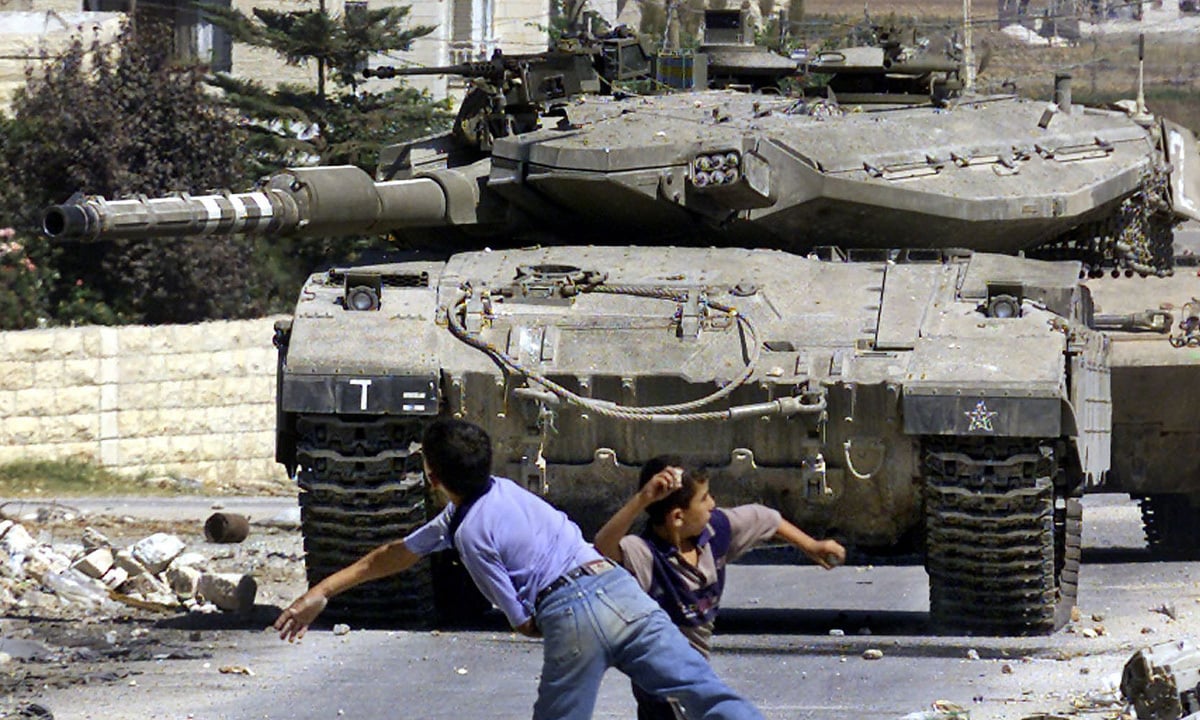
In Palestine, children have long been both victims and symbols. Whether killed in airstrikes, detained by military courts, or portrayed holding stones in front of tanks, Palestinian children embody the brutality of occupation and the resilience of a people under siege. As images of destruction, starvation, and death emerge daily from Gaza and the West Bank (occupation-apartheid), the poem’s central figure – a child shot dead by soldiers – becomes tragically universal. Written in another era and in a foreign language, it is a poem without borders. It insists that the reader see the child, and remember them. They are symbols of ongoing injustice that will not be erased. Children continue to suffer and die in Palestine. More than 17,400 to date. Unspeakable violence is visited daily on the children of Palestine – not seen in any conflict in our history. The children of Palestine are the children of Nyanga, Phillipi, and Sharpeville – and Ingrid Jonker’s poem finds a second life in Gaza. It becomes a voice of international solidarity. It demands that the world must not look away – that we never forget.

🚨JUST IN: Former Israeli Defence Minister Avigdor Lieberman Accuses Netanyahu of Arming ISIS-Like Gangs In Gaza

Former Israeli Defence Minister Avigdor Lieberman has publicly accused Prime Minister Benjamin Netanyahu of arming rogue militias in Gaza to counter Hamas. In an interview with Kan Bet public radio on Thursday, Lieberman has said that Netanyahu’s government is providing weapons to groups with alleged links to ISIS, including the “Anti-Terror Service” led by Yasser Abu Shabab, to weaken Hamas’s control in the region. Critics have alleged that Abu Shabab’s group has ties to jihadist networks, such as ISIS. In response, Netanyahu has confirmed that Israel is supporting rival clans in Gaza to combat Hamas, describing this strategy as a necessary measure to protect Israeli soldiers and counter Hamas influence. 

However, this approach has sparked controversy, with critics warning that it could backfire and exacerbate instability in Gaza. According to conservative Israeli news outlet Ynet News, Lieberman has repeatedly warned that Abu Shabab has ties to extremist group ISIS. The Israel Defence Forces (IDF) have not officially responded to these allegations. The United Nations and humanitarian officials have confirmed that gangs like Abu Shabab’s have looted aid under Israeli oversight, leading to a strike by Gaza’s truck drivers after deadly attacks on aid convoys. Ynet News also reported that the European Union’s foreign policy chief, Joseph Borrell, has accused Israel of financing Hamas to weaken the Palestinian Authority. He stated that Hamas was financed by the government of Israel in an attempt to undermine the Palestinian Authority. It is widely believed that such a strategy would also undermine and thwart a two-state solution. 

According to left-leaning Israeli news outlet Haaretz, at the end of last year, amid a surge in looting of humanitarian aid in southern Gaza, Abu Shabab and his men were widely accused of being behind the theft. In a November 2024 phone interview with The Washington Post, Abu Shabab did not fully deny the allegations, saying that his group avoided taking food, tents or supplies intended for children. It is worth mentioning that the Israel Defence Forces (IDF) are widely recognised as one of the most advanced and capable military organisations in the modern world. It has developed some of the most sophisticated defence systems in the world, many of which are widely adopted by other countries. Despite Israel’s small geographical size and population, the IDF’s military power is rooted in cutting-edge technology, strategic innovation, and rigorous training – the question now remains – why would Israel (the IDF and Benjamin Netanyahu) require the services of rogue militias such as ISIS or similar terrorist organisations in Gaza to defeat Hamas? 

🚨Doomsday Clock Now 89 Seconds to Midnight As Russo-Ukraine War Escalates

The war in Ukraine has become a geopolitical flashpoint with consequences far beyond Eastern Europe. As Ukraine intensifies its counterattacks, including strikes deep into Russian territory, fears grow that Russia will respond with overwhelming force. While conventional warfare has so far dominated the battlefield, the underlying threat of nuclear escalation looms ever larger. In such a precarious environment, each act of aggression pushes the world closer to the abyss of nuclear war, a war in which there are no victors.

“The fundamental idea behind this book is to demonstrate, in appalling detail, just how horrifying nuclear war would be.” – Annie Jacobsen, author of Nuclear War: A Scenario

Unlike conventional warfare, where victory can be measured in territory or strategic advantage, nuclear war holds the potential for total annihilation. It was in this context that the concept of Mutual Assured Destruction (MAD) emerged. MAD is a paradoxical doctrine that has both prevented war and threatened the survival of humanity. MAD is not a moral argument or a humanitarian strategy, it is a theory of deterrence based on the certainty of mutual extinction. While nuclear weapons have not been used in combat since 1945, recent threats from Russian officials have challenged decades of nuclear restraint. Any strike on Russia perceived as existential by the Kremlin raises the risk of escalation beyond conventional means.

Even the use of a single tactical nuclear weapon would shatter global norms and invite retaliation. The humanitarian consequences would be immense: millions dead, infrastructure destroyed, the environment poisoned, and global economies thrown into chaos. The Nuclear Winter Theory predicts that widespread nuclear exchanges would plunge the Earth into years of famine and climate disruption, affecting even those far removed from the battlefield. The Ukraine-Russia conflict is not just a regional war; it is a global alarm bell. The world cannot afford complacency. Diplomacy, dialogue, and de-escalation are not signs of weakness – they are necessities for survival. World leaders must prioritise negotiations, strengthen communication channels, and reaffirm nuclear red lines. The idea that one side could “win” a nuclear war is not only militarily delusional but morally bankrupt. Even a so-called “limited” nuclear exchange would result in a humanitarian catastrophe. There are no winners in nuclear war – only unspeakable loss and the haunting regret of what could have been prevented.

A Barrier to Peace: The United States Vetoes Another UNSC Ceasefire Resolution

The United States’ repeated use of its veto power at the United Nations Security Council (UNSC) to block ceasefire resolutions in Gaza has become a focal point of international criticism. According to The Guardian, since the onset of the Israel-Hamas conflict in October 2023, the U.S. has exercised its veto six times to prevent resolutions calling for an immediate and unconditional ceasefire, despite overwhelming support from other council members. The most recent veto occurred on June 4, 2025, when the U.S. blocked a resolution co-sponsored by Algeria, Greece, and Pakistan that demanded an immediate and permanent ceasefire in Gaza and unrestricted humanitarian access. The United States has repeatedly stressed the need for peace and stability in the Middle East, yet exercises its veto powers to prevent an immediate ceasefire that undoubtedly could save thousands of lives in Gaza. According to the Associated Press, U.S. Ambassador Dorothy Shea argued that the resolution undermined ongoing diplomatic efforts and favored Hamas, stating that it did not link the ceasefire to the release of hostages held by Hamas and lacked a condemnation of Hamas’ October 7, 2023, attack on Israel. However, contrary to Shea’s position, 90% of the hostages released by Hamas have happened in the absence of military pressure by Israel and the United States.

These repeated vetoes have drawn widespread international condemnation. Countries such as China, Russia, and France have criticised the U.S. for obstructing peace efforts and facilitating the suffering of Palestinians. The humanitarian situation in Gaza is dire. As of June 2025, over 61,700 Palestinians have been killed, and the majority of Gaza’s 2.3 million residents have been displaced. There are thousands missing, and thousands more buried under the rubble. The United Nations has reported shortages of food, fuel, water, and medicine, along with the threat of famine and diseases. The U.S.’ stance at the UNSC has been seen as a barrier to addressing the urgent needs of the people of Palestine. It is also viewed as a barrier for peace in the Middle East.

The repeated use of its veto power to block ceasefire resolutions in Gaza has led to the US isolating itself, and it is no doubt contributing to the ongoing humanitarian crisis in Gaza. When we consider the US’ lukewarm approach to settler violence in the West Bank, another veto sends a mixed message. Sanctioning individual extremists for ongoing cruelty in the West Bank yet allowing for the violence to continue in Gaza is an obvious double standard. By prioritising its strategic alliance with Israel above humanitarian considerations, the U.S. risks being complicit in the suffering of innocent civilians and undermining efforts toward lasting peace in the Middle East.

The Death Penalty Debate: A Deterrence or Draconic?

South Africa faces a serious crime problem, with high rates of murder, gender-based violence, and other violent offenses. As frustration grows, some citizens and politicians have called for the reinstatement of the death penalty as a way to deter crime and restore order. South Africa abolished capital punishment in 1995, when the Constitutional Court ruled it unconstitutional. But should South Africa bring back the death penalty? and would it actually work as a deterrent to crime? Many South Africans feel that the justice system is failing, especially after the recent brutal killings of WITS student Olorato Mongale, and fourteen-year-old high school student, Likona Fose. To some, the death penalty represents justice, closure, and a strong message to potential criminals. Supporters argue that harsh punishments prevent crime. If people fear losing their lives, they may think twice before committing murder or rape. Some view the death penalty as the ultimate punishment, and believe it can act as a powerful deterrent, especially in a country with a high crime rate.

South Africa’s prisons are overcrowded, and keeping violent offenders behind bars for decades is expensive. Some argue that executing the most dangerous criminals would reduce prison costs and make space for rehabilitation of non-violent offenders. There are however arguments against the death penalty, and evidence that deterrence of this nature isn’t effective in dealing with crime or criminals. The South African Constitution protects the right to life. The Constitutional Court ruled in S v Makwanyane (1995) that the death penalty violates the rights to dignity and life. Furthermore, if a person is wrongly convicted, an execution is irreversible – a grave injustice that cannot be undone. Studies from various countries, including the U.S. and others, have shown little to no evidence that the death penalty is more effective than life imprisonment in deterring crime. South Africa’s own high murder rate during the apartheid era, when the death penalty was still in use, suggests that execution alone does not stop violent crime. In unequal societies, the justice system can be biased. Poor defendants often can’t afford good lawyers, and racial or political prejudice can influence verdicts. The death penalty could be used unjustly, especially against the vulnerable.

In a 2009 survey of top criminologists by the University of Colorado found that 88% did not believe the death penalty is an effective deterrent. In Canada, the homicide rate continued to decline after abolishing the death penalty in 1976. In South Africa, the death penalty did not prevent high murder rates in the 1980s and early 1990s, showing no clear link between capital punishment and reduced crime. The University of Cape Town criminology experts have repeatedly warned that there is no strong link between the death penalty and reduced murder rates. Bringing back the death penalty in South Africa may feel emotionally satisfying to a public plagued by violent crime, but it raises serious legal, moral, and practical concerns. There is no reliable evidence that it works as a deterrent, and it carries the risk of irreversible injustice. Instead, South Africa should focus on strengthening the criminal justice system, improving policing, and conviction rates. Moreover, investing in education and poverty reduction, and ensuring harsh but fair and constitutional penalties for violent crimes. The real solution to crime lies not in state-sanctioned execution, but in building a safer, more just, and more equal society.

Bringing back the death penalty in South Africa may feel emotionally satisfying to a public plagued by violent crime, but it raises serious legal, moral, and practical concerns. There is no reliable evidence that it works as a deterrent, and it carries the risk of irreversible injustice. Instead, South Africa should focus on strengthening the criminal justice system, improving policing, and conviction rates. Moreover, investing in education and poverty reduction, and ensuring harsh but fair and constitutional penalties for violent crimes. The real solution to crime lies not in state-sanctioned execution, but in building a safer, more just, and more equal society.

🚨UPDATE: Another Deadly Shooting As Israeli Forces Kill 27 Palestinians At Aid/Food Distribution Point

The Gaza-run health ministry has said that 27 people were killed after coming under Israeli gunfire for the second time in Rafah whilst waiting to collect aid packages. On the 2nd of June, 51 Palestinian civilians were killed at a food/aid distribution point in Gaza. The United Nations and associate aid groups have denounced the killing of dozens of starving Palestinians seeking food near the US-backed Gaca Humanitarian Foundation.

Israel’s war on Gaza has killed at least 61,700 Palestinians, mostly women and children, with over 124, 693 injured as reported by Gaza’s Health Ministry. According to health officials, the true death toll is hard to determine because of the challenging circumstances. Thousands of civilians are missing, presumed dead, whilst others are buried under collapsed buildings and structures. Speaking to BBC World, Mandy Blackman, a medic working in Gaza has described a very desperate situation at Al-Mawasi hospital following the shooting.

“The patients reported that they’d been going to get the food aid, and it was during this journey that they sustained their injuries,” she explains.

“We’ve seen gunshot wounds, we’ve seen some stabbings, people beaten by what they say were bricks, and we’ve had people who’ve been pepper sprayed as well.”

And, the emergency medic says these reported attacks at aid distribution centres has left the hospital “running at pretty much 100% capacity”.

The Israeli military says it fired shots near an aid complex after identifying “several suspects” and it is examining reports of casualties. The CapeTown Post would like to bring to the attention of the reader that independent (and international) media outlets have been barred by the Israeli government from reporting in the enclave since 2023.