
Ingrid Jonker’s anti-apartheid poem “the child is not dead” and the Children of Palestine

Ingrid Jonker’s poem “Die kind (wat doodgeskiet is deur soldate by Nyanga)”, translated as “The child who was shot dead by soldiers at Nyanga”, remains one of the most haunting and powerful literary works to emerge from apartheid-era South Africa. Written in Afrikaans, the language most associated with the apartheid regime, the poem was a radical act of resistance that challenged the moral conscience of the country. Through stark imagery and emotional intensity, Jonker’s poem humanised the suffering of black South Africans during apartheid. 

Afrikaans, the language of the white Afrikaner minority, at the time was used as a tool of ideological dominance. The poet’s choice to write “Die kind is nie dood nie” (“The child is not dead”) in Afrikaans was profoundly symbolic. She turned the language of oppression into a medium of empathy and resistance, using it to bear witness to the suffering of black children under apartheid, most notably, a child killed by the police in the township of Nyanga (Cape Town) whilst protesting. The line, “Die kind is nie dood nie” (“The child is not dead”), functions as both a declaration and a lament. Jonker asserts that the child – a symbol of innocence  – lives on in every act of state violence, in every courtroom that upholds injustice, and in every silent complicity of the powerful.

Die kind (In Afrikaans)

Die kind is nie dood nie
die kind lig sy vuiste teen sy moeder
wat Afrika skreeu skreeu die geur van vryheid en heide
in die lokasies van die omsingelde hart
Die kind lig sy vuiste teen sy vader
in die optog van die generasies
wat Afrika skreeu skreeu die geur
van geregtigheid en bloed
in die strate van sy gewapende trots

Die kind is nie dood nie
nòg by Langa nòg by Nyanga
nòg by Orlando nòg by Sharpville
nòg by die polisiestasie in Philippi
waar hy lê met ‘n koeël deur sy kop

Die kind is die skaduwee van die soldate
op wag met gewere, sarasene en knuppels
die kind is teenwoordig by alle vergaderings en wetgewings
die kind loer deur die vensters van huise en in die harte van moeders
die kind wat net wou speel in die son by Nyanga is orals
die kind wat ‘n man geword het trek deur die ganse Afrika
die kind wat ‘n reus geword het reis deur die hele wereld

sonder ‘n pass

The child (English Translation)

The child is not dead
The child lifts his fists against his mother
Who shouts Afrika ! shouts the breath
Of freedom and the veld
In the locations of the cordoned heart

The child lifts his fists against his father
in the march of the generations
who shouts Afrika ! shout the breath
of righteousness and blood
in the streets of his embattled pride

The child is not dead
not at Langa nor at Nyanga
not at Orlando nor at Sharpeville
nor at the police station at Philippi
where he lies with a bullet through his brain

The child is the dark shadow of the soldiers
on guard with rifles, saracens and batons
the child is present at all assemblies and law-givings
the child peers through the windows of houses and into the hearts of mothers
this child who just wanted to play in the sun at Nyanga is everywhere
the child who became a man treks through all of Africa
the child who became a giant travels through the whole world

without a pass

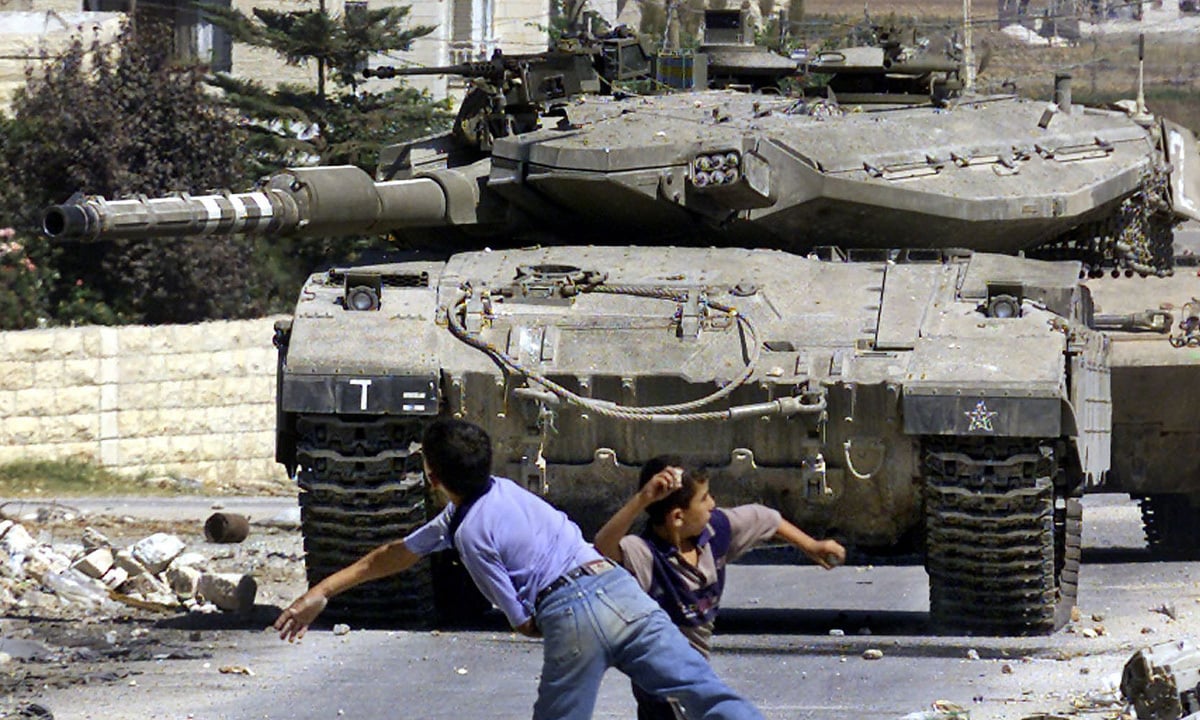
In Palestine, children have long been both victims and symbols. Whether killed in airstrikes, detained by military courts, or portrayed holding stones in front of tanks, Palestinian children embody the brutality of occupation and the resilience of a people under siege. As images of destruction, starvation, and death emerge daily from Gaza and the West Bank (occupation-apartheid), the poem’s central figure – a child shot dead by soldiers – becomes tragically universal. Written in another era and in a foreign language, it is a poem without borders. It insists that the reader see the child, and remember them. They are symbols of ongoing injustice that will not be erased. Children continue to suffer and die in Palestine. More than 17,400 to date. Unspeakable violence is visited daily on the children of Palestine – not seen in any conflict in our history. The children of Palestine are the children of Nyanga, Phillipi, and Sharpeville – and Ingrid Jonker’s poem finds a second life in Gaza. It becomes a voice of international solidarity. It demands that the world must not look away – that we never forget.

The Death Penalty Debate: A Deterrence or Draconic?

South Africa faces a serious crime problem, with high rates of murder, gender-based violence, and other violent offenses. As frustration grows, some citizens and politicians have called for the reinstatement of the death penalty as a way to deter crime and restore order. South Africa abolished capital punishment in 1995, when the Constitutional Court ruled it unconstitutional. But should South Africa bring back the death penalty? and would it actually work as a deterrent to crime? Many South Africans feel that the justice system is failing, especially after the recent brutal killings of WITS student Olorato Mongale, and fourteen-year-old high school student, Likona Fose. To some, the death penalty represents justice, closure, and a strong message to potential criminals. Supporters argue that harsh punishments prevent crime. If people fear losing their lives, they may think twice before committing murder or rape. Some view the death penalty as the ultimate punishment, and believe it can act as a powerful deterrent, especially in a country with a high crime rate.

South Africa’s prisons are overcrowded, and keeping violent offenders behind bars for decades is expensive. Some argue that executing the most dangerous criminals would reduce prison costs and make space for rehabilitation of non-violent offenders. There are however arguments against the death penalty, and evidence that deterrence of this nature isn’t effective in dealing with crime or criminals. The South African Constitution protects the right to life. The Constitutional Court ruled in S v Makwanyane (1995) that the death penalty violates the rights to dignity and life. Furthermore, if a person is wrongly convicted, an execution is irreversible – a grave injustice that cannot be undone. Studies from various countries, including the U.S. and others, have shown little to no evidence that the death penalty is more effective than life imprisonment in deterring crime. South Africa’s own high murder rate during the apartheid era, when the death penalty was still in use, suggests that execution alone does not stop violent crime. In unequal societies, the justice system can be biased. Poor defendants often can’t afford good lawyers, and racial or political prejudice can influence verdicts. The death penalty could be used unjustly, especially against the vulnerable.

In a 2009 survey of top criminologists by the University of Colorado found that 88% did not believe the death penalty is an effective deterrent. In Canada, the homicide rate continued to decline after abolishing the death penalty in 1976. In South Africa, the death penalty did not prevent high murder rates in the 1980s and early 1990s, showing no clear link between capital punishment and reduced crime. The University of Cape Town criminology experts have repeatedly warned that there is no strong link between the death penalty and reduced murder rates. Bringing back the death penalty in South Africa may feel emotionally satisfying to a public plagued by violent crime, but it raises serious legal, moral, and practical concerns. There is no reliable evidence that it works as a deterrent, and it carries the risk of irreversible injustice. Instead, South Africa should focus on strengthening the criminal justice system, improving policing, and conviction rates. Moreover, investing in education and poverty reduction, and ensuring harsh but fair and constitutional penalties for violent crimes. The real solution to crime lies not in state-sanctioned execution, but in building a safer, more just, and more equal society.

Bringing back the death penalty in South Africa may feel emotionally satisfying to a public plagued by violent crime, but it raises serious legal, moral, and practical concerns. There is no reliable evidence that it works as a deterrent, and it carries the risk of irreversible injustice. Instead, South Africa should focus on strengthening the criminal justice system, improving policing, and conviction rates. Moreover, investing in education and poverty reduction, and ensuring harsh but fair and constitutional penalties for violent crimes. The real solution to crime lies not in state-sanctioned execution, but in building a safer, more just, and more equal society.

INSIGHT: Can South Africa Trust Elon Musk After White House Faux Genocide Chaos?

Elon Musk captured global attention not only for his technological innovations, but also for his polarising public statements. One such statement, his amplification of the false narrative of “white genocide” in South Africa. Another was that the Expropriation of Land Act is unlawful, whilst omitting the context of apartheid’s legacy (Group Areas Act of 1950) and the impact it had on people of colour in South Africa. Musk repeatedly mentioned the “140 race laws” impacting the white population, an obvious lie. This has sparked outrage across South Africa and in the United States, and it has led many in South Africa to question whether the government should place its trust in Musk’s satellite internet project. Elon Musk echoed far-right claims that white South African farmers were being intentionally targeted and killed because they were white, a far-right conspiracy promoted by Afrikaaner lobby group, Afriforum. Afriforum leader Ernst Roets appeared on Fox News, and while he didn’t specifically use the words “White Genocide”, it was inferred. These claims have been widely debunked by crime data, human rights organisations, scholars, and journalists across South Africa.

By amplifying this myth, Musk not only spread misinformation, but also played into a dangerous narrative often used by white nationalist groups in the United States and Europe. For many South Africans, especially black, Indian, and Coloured South Africans who endured centuries of colonial and apartheid violence, this was not just a factual error, but an insult to the country’s complex reality. On the other hand, Starlink offers a compelling technological opportunity. With many rural areas in South Africa still lacking reliable internet, Starlink’s satellite-based system could provide high-speed connectivity where traditional infrastructure has failed. The service could boost education, healthcare, business, and communication in remote areas – key sectors for economic and social upliftment. South Africans have every right to be doubtful of his intentions. Spreading far-right conspiracies and populist rhetoric may have damaged relations, casting doubt on his character altogether. However, Starlink as a technology still holds significant potential to improve lives. The South African government should approach the issue of Starlink and Elon Musk with caution.

HEALTH: 5 Signs of a Toxic Work Environment

The past five years have been challenging to say the least. As a country, post-covid South Africa has been very slow to recover economically. In addition, we are seeing an increase in violence: contact and sexual crimes, there is an increase in kidnappings, and the online space is fraught with opportunists looking for a naive soul to con. Then there are soaring food prices, petrol prices, job shortages, and interest hikes – the list goes on. Many people are already emotionally depleted. We see negative news on repeat – propaganda at every turn, it’s become impossible to look away. Obviously this is having a profound impact on South Africans’ mental wellbeing. With all of the madness going on, what do you do when your work environment proves to be toxic and difficult? It can be very tricky and emotionally draining to navigate the perilous and tumultuous waters that is a negative work environment. But know that you are not alone. Hundreds of South Africans have expressed negative feelings about their working environments. In this article, we will look at some tell-tale signs of a toxic work environment, and what you can do about it. According to Career Contessa:

“A toxic work environment is like having all of these challenges on repeat, without a break. It’s red flags on top of red flags. It’s a passive aggressive boss or inappropriate comments from your coworkers about the person you replaced – reduced (or non-existent) boundaries.” – Career
Contessa https://www.careercontessa.com/advice/toxic-work-environment/

In conversation with a few professionals and drawing from personal experience, here are 5 signs to look out for:

  1. Cliqueness Within the Team
  2. Poor Communication
  3. No Leadership
  4. High Staff Turnover
  5. Your Body Just Says No

Cliqueness Within the Team

If you find yourself deliberately being excluded from certain social events within the work environment, you’re probably dealing with a clique. When your colleagues openly flaunt their closeness, it can be tough to feel left out and alienated. If despite your best efforts they make you feel like a leper, our advice would be not to compromise yourself by seeking said individuals’ approval or acceptance. This will only make you appear vulnerable, and the consequences would be more bullying and isolation. Also, this kind of thinking will keep you in a toxic cycle of self-criticism.

Poor Communication

If there is little communication regarding your day-to-day projects, zero camaraderie amongst staff members, and no team building exercises, these are serious red flags. More red flags would include your managers or leaders being unmotivated and unconcerned about their duties, and more interested in being popular, in control, being seen/heard – you need to “Yeet” yourself (slang: forcefully remove) from such an environment as soon as possible.

No Leadership

Lack of leadership is when the individuals incharge do not have the capability to deal with intricate or sensitive matters. A manager who is incapable of taking responsibility for their actions is in no position to lead or give direction. It will be very difficult to take said individual seriously or even respect such a person. If there is no accountability, the individual probably lacks emotional maturity, and the consequences may be that your growth is impacted.

A High Staff Turnover

If a company has an obvious “revolving door” problem, meaning, it is a place where people are coming and going – where job appointments are fast and without due process, this is a sign of a greater and serious problem with the company’s values.

Your Body Just Says No

If your workplace is compromising your mental health, and has little steps in place to assist you, it is time to leave. Going forward, the best advice we can offer is to plan a solid exit strategy. Secure new work as quickly as possible and plan ahead. Preserve your mental health at all costs. Talk to a professional, tell a loved one. Remember, your life is important and you matter. Simply put, do not waste your time slaving for a boss or manager who does not prioritise your wellness.