The Silence of Western Feminists on the Suffering of Palestinian Girls and Women

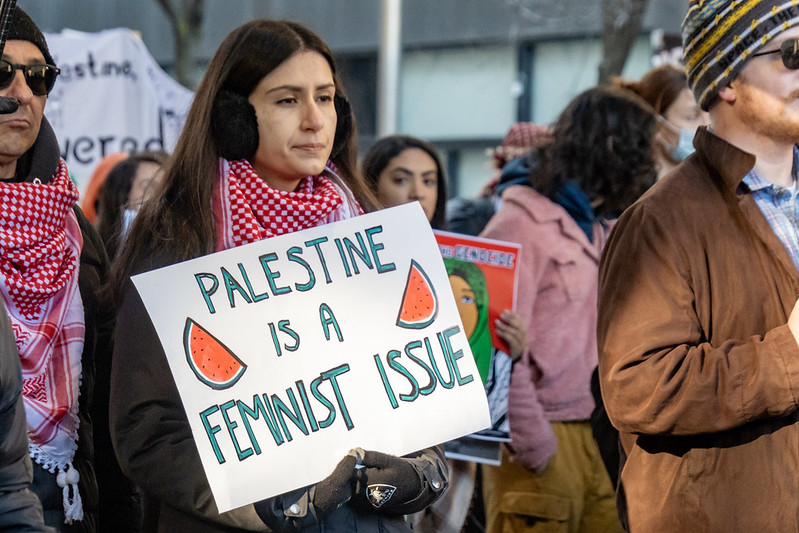
The silence of Western feminists on the abuse and slaughter of Palestinian women and girls in Gaza at the hands of the Israeli military is deafening. According to a 2025 United Nations report, it is estimated that over 28,000 women and girls have been killed in Gaza by Israeli forces since 7th October 2023. This equates to approximately one woman or girl killed every hour. This figure is derived using both direct reporting and a methodology from The Lancet that estimates underreported deaths – about 41% undercounting. 

Over the years, many Western feminists have made it their business to speak out on women’s rights in the Middle East, e.g., the Yazidi crisis, education for Afghan girls, Iranian women’s hair related protests, etc. But there is one obvious caveat when it comes to the Middle East, the exclusion of Palestinian women. Women and girls in Gaza and the West Bank are being subjected to the most inhumane, cruel and undignified circumstances that exceed that of the Nakba of 1948. Since October 7th 2023, it has been reported that many Palestinian women have been denied proper gynecological medication and care – some are forced to give birth without treatment whilst others undergo cesarean sections without anesthesia due to Israel’s crippling blockade. Many have given birth at militarised (apartheid) checkpoints – refused entry into hospitals without justification by young reservists with the authority to decide if Palestinian mothers and their infants get to live or die.

Where is the outrage from Western feminists? Those who were so passionate to declare the burka and hijab (female Muslim religious attire) as oppressive – those vocal about the issue of honour killings (cultural) in parts of Africa and the Middle East. The above of course is a very serious problem that needs addressing, but the message from Western feminists is clear: the “threat” of Muslim, African and Arab men only is to be taken seriously, while the crimes of Israeli and Western men against Palestinian women and girls in Gaza and the West Bank should be ignored. I remember reading several articles about the awful Taliban restricting education for girls and women in Afghanistan. Well, in Gaza, if you’re a girl you can’t go to school for a number of reasons: 1. there are no schools left in Gaza, 2. it is impossible to learn when you’re being starved to death, and 3. you’re already dead, courtesy of the IDF.

In my opinion, it is the inconvenience of the Palestinian woman that renders the movement itself ineffective, bordering on useless. Selective outrage will do that to any organisation. Feminism, in the case of the Palestinian woman, does not do what it was designed to do, i.e., protect and dignify all women, regardless of colour, creed, religion, etc. Since October 7th, we have heard many painful stories about the suffering of Israeli women at the hands of Hamas, but we have yet to see Western media outlets humanise Palestinian women. We are often presented with dialogues and discussions framed in an “equal sides-ism” context but the reality is this – an engineered perspective by Western outlets, one inclined towards a whitewashed Israeli narrative and not the painful truth, that women and girls in Gaza are fair game. Moreover, some white liberal feminists still unconsciously operate within a racist and Islamophobic framework, and their message often reinforces systemic prejudices about European, secular, or Israeli lives having more value than Arab, African, Palestinian or Muslim lives.

So while Western feminists loudly condemn the Taliban or Iran’s morality police, they often avoid addressing Israel’s bombing of homes, schools, and hospitals – maternity and pediatric spaces have not been spared. Also, the deaths of pregnant women, the deaths of many infants due to starvation in Gaza as a consequence of Israel’s barbaric blockade and engineered famine, and the use of sexual violence by soldiers or settlers in Gaza and the West Bank. The silence of Western feminists is not neutral, it actively protects Israeli political and military structures that cause harm and death to Palestinian women. True feminism is not selective. It cannot champion the rights of Afghani women fighting for bodily autonomy while ignoring Palestinian women being killed in Gaza and the West Bank.

Weapons of Mass Deception: the US And Israel’s War With Iran Is ‘Iraq 2003’ All Over Again

Following the invasion in March 2003 and the swift toppling of Saddam Hussein’s regime, extensive searches by U.S. and allied forces failed to uncover any active WMD programs. The Iraq Survey Group, led by Charles Duelfer, concluded in 2004 that Iraq had ended its WMD programs years earlier and did not possess stockpiles of chemical, biological, or nuclear weapons at the time of the invasion. The absence of WMDs dealt a major blow to the credibility of the U.S. government. It exposed how intelligence had been exaggerated, cherry-picked, and even misinterpreted to fit a predetermined policy agenda. The war, initially framed as a necessary action to disarm a dangerous regime, increasingly came to be viewed as a war of choice built on false pretenses. The use of WMDs as a justification for the Iraq War had far-reaching consequences. Domestically, it led to a significant erosion of public trust in government and media institutions. Internationally, it damaged U.S. credibility and strained alliances, particularly with countries that had opposed the invasion, such as France and Germany. 

In the realm of geopolitics, history rarely repeats itself perfectly. But as tensions between the United States, Israel, and Iran escalate, many analysts and observers have drawn parallels to the lead-up to the U.S. invasion of Iraq in 2003. Right now, Iran is framed as a grave and imminent threat to the world – accused of developing weapons of mass destruction, and is being demonised through a steady stream of strategic misinformation. The narrative architecture that justified the Iraq War is being reconstructed once more, with Iran as the primary villain. Despite the fact that Iran remains a signatory to the Nuclear Non-Proliferation Treaty (NPT) and that U.S. intelligence agencies have repeatedly stated that Iran is not actively pursuing a nuclear weapon, the “threat” is consistently amplified. 

The International Atomic Energy Agency (IAEA), the UN’s nuclear watchdog, has monitored Iran’s nuclear program for decades. While Iran has enriched uranium to higher levels in recent years, especially after the U.S. withdrawal from the 2015 Joint Comprehensive Plan of Action (JCPOA), the IAEA has not found proof that Iran is diverting nuclear material toward a weapons program. The CIA and the Director of National Intelligence (DNI), have consistently stated in public reports that Iran is not currently developing a nuclear weapon. In Spite of the above, some U.S. officials and Israeli neocons frame Iran as an existential danger – not only to Israel but to the world. This is dangerous and irresponsible rhetoric. The Israeli government, particularly under leaders like Benjamin Netanyahu, has long warned that Iran “is only months away from acquiring a nuclear weapon” – a claim he repeated for over three decades. These expressions obviously serve to manufacture urgency and reduce the space for diplomacy – just as the WMD hysteria silenced dissent in 2003. In fact, Netanyahu testified before Congress in the United States that Iraq had WMDs – obviously a lie. 

We will now remind the reader of the devastation following the US’ unjust invasion of Iraq in 2003. The war itself resulted in immense human suffering. Estimates suggest 1 million Iraqi civilians died as a result of the conflict and its aftermath. The invasion also destabilised the region, contributing to the rise of extremist Daesh groups such as ISIS, and triggering a humanitarian crisis that persists to this day. In Fallujah, the consequences of US intervention lingers as well. According to the International Journal of Environmental Research and Public Health, there was a 38-fold increase in childhood leukemia in Fallujah compared to international averages – a type of blood cancer very rare in young populations, believed to be linked to toxic environmental exposure following the bombings. A 2010 epidemiological survey found that childhood cancer rates were 12 times higher in Iraq than in neighboring countries like Jordan or Kuwait. Families reported clusters of leukemia within neighborhoods, with multiple cases in single families or small communities. Multiple independent investigations have identified US depleted uranium (DU) munitions as a cause of this public health crisis. Fallujah has been described as “the most contaminated city in the world” by some health experts. A 2011 Lancet study concluded that birth defects and cancer clusters were consistent with exposure to ionising radiation and environmental toxins. 

The U.S. and Israel’s current trajectory toward conflict with Iran bears all the hallmarks of the prelude to the Iraq War of 2003: exaggerated threats, manipulated intelligence, marginalised diplomacy, and media complicity. But unlike 2003, the stakes today are even higher. The world has already witnessed the costs of war built on lies, yet those lessons are being discarded in favor of renewed militarism and strategic dominance. To avoid repeating the grave mistakes of 2003, it is essential for those who can effect change in the United States to question such suspicious narratives, demand transparency, and prioritise diplomacy over war and destruction. 

🚨URGENT: Gaza Continues to Starve as Israel Seizes Greta Thunberg’s Food-Aid Flotilla

As of mid-2025, the United Nations and multiple international aid organisations have issued urgent warnings of famine in parts of Gaza, with children and vulnerable populations already dying of hunger-related causes. These conditions are not merely a byproduct of war, they are the result of deliberate policy by the Israeli government – an engineered famine. This raises profound ethical, legal, and political questions about the use of starvation as a weapon of war. Gaza has been under a blockade by Israel since 2007. Following October the 7th, Defense Minister Yoav Gallant called for a “complete siege,” explicitly stating: “No electricity, no food, no water, no fuel.” Under international humanitarian law, starvation of civilians as a method of warfare is a war crime. The Rome Statute of the International Criminal Court explicitly defines this act as a war crime when done “intentionally.” Multiple UN experts, including the Special Rapporteur on the Right to Food, have accused Israel of using starvation as a weapon and called for accountability. Israel denies that it is intentionally starving Gaza, arguing that Hamas diverts aid and steals food. However, this claim is challenged by the scale of suffering and the consistent obstruction of aid efforts, as reported by UN agencies, NGOs, Doctors, and Medics. According to reports from the World Food Programme (WFP) and UNICEF, almost the entire population of Gaza is now food insecure, with the northern region already experiencing famine conditions. Infants have died from malnutrition and dehydration.

In response, environmental and human rights activist Greta Thunberg joined a civilian-led humanitarian flotilla (Madleen) sailing to Gaza in an attempt to break the siege, a bold act of solidarity and moral resistance. Thunberg’s decision to join is an echo of past efforts to break the blockade, not with weapons or violence, but with moral pressure. The flotilla, carrying critical medical supplies, food, water filters, and activists from around the world, is a direct challenge to Israel’s siege. This is not the first time civilians have attempted to break the Gaza blockade by sea. In 2010, the Mavi Marmara humanitarian flotilla was intercepted by Israeli forces, resulting in the deaths of nine activists. Prominent right-wing politicians and media figures in Israel and the United States have openly wished harm and even death upon Thunberg, calling her a “terrorist sympathiser,” and an “antisemite”. Some have even suggested that the Madleen flotilla be intercepted with violence. Such rhetoric is not only abhorrent, it signals a deeper and more disturbing political transformation, i.e., the normalisation of fascist rhetoric, authoritarian tactics, and dehumanisation of dissenters.

Unfortunately, we regret to report that the Madleen flotilla was not able to deliver aid and food to thousands of starving Gazans – men, women, and children – the elderly, disabled, mentally impaired, and the injured. Israeli forces seized the flotilla at 3:00 a.m. local time, and all members onboard the Madleen were detained. This expedition by Thunberg and her colleagues will forever be remembered as a shining light of the most noble kind in very dark times. Greta Thunderg’s bravery, humility, and maturity puts to shame many leaders across the globe, from Arabia to Europe, and in the United States. Leaders who could end Israel’s barbaric starvation campaign with the stroke of their pens, but choose not to – senators and ministers who have exchanged their morality and ethics for money and self-aggrandising campaigns. The world deserves better leaders. 

🚨JUST IN: Former Israeli Defence Minister Avigdor Lieberman Accuses Netanyahu of Arming ISIS-Like Gangs In Gaza

Former Israeli Defence Minister Avigdor Lieberman has publicly accused Prime Minister Benjamin Netanyahu of arming rogue militias in Gaza to counter Hamas. In an interview with Kan Bet public radio on Thursday, Lieberman has said that Netanyahu’s government is providing weapons to groups with alleged links to ISIS, including the “Anti-Terror Service” led by Yasser Abu Shabab, to weaken Hamas’s control in the region. Critics have alleged that Abu Shabab’s group has ties to jihadist networks, such as ISIS. In response, Netanyahu has confirmed that Israel is supporting rival clans in Gaza to combat Hamas, describing this strategy as a necessary measure to protect Israeli soldiers and counter Hamas influence. 

However, this approach has sparked controversy, with critics warning that it could backfire and exacerbate instability in Gaza. According to conservative Israeli news outlet Ynet News, Lieberman has repeatedly warned that Abu Shabab has ties to extremist group ISIS. The Israel Defence Forces (IDF) have not officially responded to these allegations. The United Nations and humanitarian officials have confirmed that gangs like Abu Shabab’s have looted aid under Israeli oversight, leading to a strike by Gaza’s truck drivers after deadly attacks on aid convoys. Ynet News also reported that the European Union’s foreign policy chief, Joseph Borrell, has accused Israel of financing Hamas to weaken the Palestinian Authority. He stated that Hamas was financed by the government of Israel in an attempt to undermine the Palestinian Authority. It is widely believed that such a strategy would also undermine and thwart a two-state solution. 

According to left-leaning Israeli news outlet Haaretz, at the end of last year, amid a surge in looting of humanitarian aid in southern Gaza, Abu Shabab and his men were widely accused of being behind the theft. In a November 2024 phone interview with The Washington Post, Abu Shabab did not fully deny the allegations, saying that his group avoided taking food, tents or supplies intended for children. It is worth mentioning that the Israel Defence Forces (IDF) are widely recognised as one of the most advanced and capable military organisations in the modern world. It has developed some of the most sophisticated defence systems in the world, many of which are widely adopted by other countries. Despite Israel’s small geographical size and population, the IDF’s military power is rooted in cutting-edge technology, strategic innovation, and rigorous training – the question now remains – why would Israel (the IDF and Benjamin Netanyahu) require the services of rogue militias such as ISIS or similar terrorist organisations in Gaza to defeat Hamas? 

🚨Doomsday Clock Now 89 Seconds to Midnight As Russo-Ukraine War Escalates

The war in Ukraine has become a geopolitical flashpoint with consequences far beyond Eastern Europe. As Ukraine intensifies its counterattacks, including strikes deep into Russian territory, fears grow that Russia will respond with overwhelming force. While conventional warfare has so far dominated the battlefield, the underlying threat of nuclear escalation looms ever larger. In such a precarious environment, each act of aggression pushes the world closer to the abyss of nuclear war, a war in which there are no victors.

“The fundamental idea behind this book is to demonstrate, in appalling detail, just how horrifying nuclear war would be.” – Annie Jacobsen, author of Nuclear War: A Scenario

Unlike conventional warfare, where victory can be measured in territory or strategic advantage, nuclear war holds the potential for total annihilation. It was in this context that the concept of Mutual Assured Destruction (MAD) emerged. MAD is a paradoxical doctrine that has both prevented war and threatened the survival of humanity. MAD is not a moral argument or a humanitarian strategy, it is a theory of deterrence based on the certainty of mutual extinction. While nuclear weapons have not been used in combat since 1945, recent threats from Russian officials have challenged decades of nuclear restraint. Any strike on Russia perceived as existential by the Kremlin raises the risk of escalation beyond conventional means.

Even the use of a single tactical nuclear weapon would shatter global norms and invite retaliation. The humanitarian consequences would be immense: millions dead, infrastructure destroyed, the environment poisoned, and global economies thrown into chaos. The Nuclear Winter Theory predicts that widespread nuclear exchanges would plunge the Earth into years of famine and climate disruption, affecting even those far removed from the battlefield. The Ukraine-Russia conflict is not just a regional war; it is a global alarm bell. The world cannot afford complacency. Diplomacy, dialogue, and de-escalation are not signs of weakness – they are necessities for survival. World leaders must prioritise negotiations, strengthen communication channels, and reaffirm nuclear red lines. The idea that one side could “win” a nuclear war is not only militarily delusional but morally bankrupt. Even a so-called “limited” nuclear exchange would result in a humanitarian catastrophe. There are no winners in nuclear war – only unspeakable loss and the haunting regret of what could have been prevented.

A Barrier to Peace: The United States Vetoes Another UNSC Ceasefire Resolution

The United States’ repeated use of its veto power at the United Nations Security Council (UNSC) to block ceasefire resolutions in Gaza has become a focal point of international criticism. According to The Guardian, since the onset of the Israel-Hamas conflict in October 2023, the U.S. has exercised its veto six times to prevent resolutions calling for an immediate and unconditional ceasefire, despite overwhelming support from other council members. The most recent veto occurred on June 4, 2025, when the U.S. blocked a resolution co-sponsored by Algeria, Greece, and Pakistan that demanded an immediate and permanent ceasefire in Gaza and unrestricted humanitarian access. The United States has repeatedly stressed the need for peace and stability in the Middle East, yet exercises its veto powers to prevent an immediate ceasefire that undoubtedly could save thousands of lives in Gaza. According to the Associated Press, U.S. Ambassador Dorothy Shea argued that the resolution undermined ongoing diplomatic efforts and favored Hamas, stating that it did not link the ceasefire to the release of hostages held by Hamas and lacked a condemnation of Hamas’ October 7, 2023, attack on Israel. However, contrary to Shea’s position, 90% of the hostages released by Hamas have happened in the absence of military pressure by Israel and the United States.

These repeated vetoes have drawn widespread international condemnation. Countries such as China, Russia, and France have criticised the U.S. for obstructing peace efforts and facilitating the suffering of Palestinians. The humanitarian situation in Gaza is dire. As of June 2025, over 61,700 Palestinians have been killed, and the majority of Gaza’s 2.3 million residents have been displaced. There are thousands missing, and thousands more buried under the rubble. The United Nations has reported shortages of food, fuel, water, and medicine, along with the threat of famine and diseases. The U.S.’ stance at the UNSC has been seen as a barrier to addressing the urgent needs of the people of Palestine. It is also viewed as a barrier for peace in the Middle East.

The repeated use of its veto power to block ceasefire resolutions in Gaza has led to the US isolating itself, and it is no doubt contributing to the ongoing humanitarian crisis in Gaza. When we consider the US’ lukewarm approach to settler violence in the West Bank, another veto sends a mixed message. Sanctioning individual extremists for ongoing cruelty in the West Bank yet allowing for the violence to continue in Gaza is an obvious double standard. By prioritising its strategic alliance with Israel above humanitarian considerations, the U.S. risks being complicit in the suffering of innocent civilians and undermining efforts toward lasting peace in the Middle East.

🚨UPDATE: Another Deadly Shooting As Israeli Forces Kill 27 Palestinians At Aid/Food Distribution Point

The Gaza-run health ministry has said that 27 people were killed after coming under Israeli gunfire for the second time in Rafah whilst waiting to collect aid packages. On the 2nd of June, 51 Palestinian civilians were killed at a food/aid distribution point in Gaza. The United Nations and associate aid groups have denounced the killing of dozens of starving Palestinians seeking food near the US-backed Gaca Humanitarian Foundation.

Israel’s war on Gaza has killed at least 61,700 Palestinians, mostly women and children, with over 124, 693 injured as reported by Gaza’s Health Ministry. According to health officials, the true death toll is hard to determine because of the challenging circumstances. Thousands of civilians are missing, presumed dead, whilst others are buried under collapsed buildings and structures. Speaking to BBC World, Mandy Blackman, a medic working in Gaza has described a very desperate situation at Al-Mawasi hospital following the shooting.

“The patients reported that they’d been going to get the food aid, and it was during this journey that they sustained their injuries,” she explains.

“We’ve seen gunshot wounds, we’ve seen some stabbings, people beaten by what they say were bricks, and we’ve had people who’ve been pepper sprayed as well.”

And, the emergency medic says these reported attacks at aid distribution centres has left the hospital “running at pretty much 100% capacity”.

The Israeli military says it fired shots near an aid complex after identifying “several suspects” and it is examining reports of casualties. The CapeTown Post would like to bring to the attention of the reader that independent (and international) media outlets have been barred by the Israeli government from reporting in the enclave since 2023.

Making Headway: Patriot Missiles & Partial Ceasefire Talks As US And Ukraine Try To Find Balance

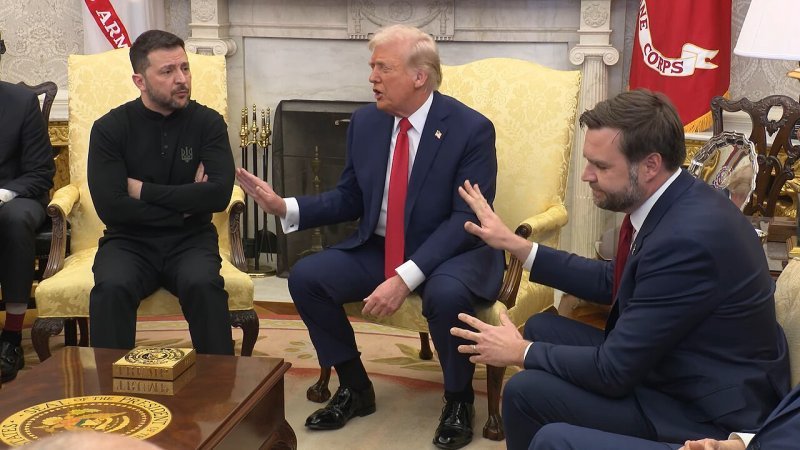
On March the 19th 2025, the Trump Administration released a statement that read like a memorandum. It detailed a telephonic engagement between Trump and Zelensky, with a tone that continued to affirm and emphasise a cordial and respectful engagement between the two presidents. Given the catastrophe that was the previous Oval Office meeting, i.e., the ‘dressing down’ of President Zelensky for the world to see by President Trump and Vice President Vance, the statement, relatively positive, discussed the possibility of a ‘limited ceasefire’ as delegations prepare to meet in Saudi Arabia in the week for renewed talks on the way forward. The Trump administration promised a ceasefire within 24-hours of the president assuming office. Although far-fetched, said promises have not come to fruition, but the ongoing efforts to end all hostilities in a turbulent part of the globe is progress, even if in increments. Let us analyse some of the key highlights in the Administration’s statement and what they entail. The limited ceasefire would focus on the halting of air-strikes by either of the two parties on energy and critical non-military infrastructure, especially aerial bombardment on facilities highly depended upon by a civilian population, e.g., railways, energy depos, dams, medical buildings and so on, as per the Geneva convention’s Article 147 (the Law of Armed Conflict), that both Ukraine and Russia are parties. The partial ceasefire’s commencement was not explicitly discussed, but the Trump Administration expressed urgency in this regard.

Zelensky’s request, however, for Patriot Missile systems in the midst of ceasefire talks may be perceived as somewhat arbitrary, but according to numerous reports, Russia’s continued violation of International Law could be the catalyst behind Zelensky’s double-speak. The Ukrainian president has reiterated that he is open to negotiations that can bring about lasting peace in the region. Moreover, Trump’s engagement with Putin was noted as positive, and the ongoing battle-situation in Kursk is being closely monitored by the US. As all parties gear towards finding a lasting solution, the US’ continued interest in Ukraine’s energy fields and nuclear power plants however has raised a few eyebrows, not only in the US, but in parts of Europe, too. Melina Haring, an expert on Ukrainian matters, while in conversation with Bloomberg, expressed that Trump’s proposal to control Ukraine’s nuclear plants was simply “weird”. One former Ukrainian official added by saying that “anything is possible with the Americans,” but conceded that the proposal was “quite unusual”, and that “the Americans would own it – and on what grounds? It belongs to Ukraine” he said, and asked if the US “planned to purchase it or if it would be taken as a concession”. Pertinent questions, no doubt, as the world waits in anticipation for a swift resolution to the conflict.

Too Eggcentric For Our Taste

In the most recent social media spat, a repost by President Donald Trump on America’s ‘eggflation’ crisis, resulted in the Left and Right going ‘elbows-up’ on X. Netizens on the Left shared their disillusionment for what they perceive to be broken promises by Trump after only fifty days in office. Moreover, there is growing frustration in some conservative circles as well about Trump repeatedly going back on his word on a number of key issues, specifically, his promise to lower the price of eggs in 2025. On the other side, MAGA loyalists came to Trump’s defence on X, offering explanations that pushback any criticism of mismanagement. One such individual, political commentator Charlie Kirk, cited the ‘bird-flu’ in an article as the core problem and advised Americans to, “shut up about egg prices”. Trump’s repost of said tweet was met with a barrage of fiery objections and absurd ‘memery’ to last us until the end of the year. But what is really behind the egg crisis in America?

According to a 2025 article published by The Guardian, corporations may be leveraging the avian-flu to inflate prices. The article goes on to say that “powerful corporations control every step of the supply chain – and are making windfall profits off this crisis, raising their prices above and beyond what is necessary to cover any rising costs.” In addition, “Cal-Maine, which produces one in every five eggs eaten in the US, issued shareholder dividends totaling $250m in fiscal year 2023 – 40 times more than the previous fiscal year.” A separate study by the Bureau of Labor Statistics also found that bird flu alone cannot explain present-day consumer prices, which rose by 61% over the past few months. Cal-Maine, one of the US’ largest egg producers, saw a sevenfold increase in profits. One politician vented by saying, “The Trump administration has the power to lower grocery bills, but instead they are imposing blanket tariffs on allies, firing federal workers, and putting billionaires over ordinary Americans.” Then there is the old adage, that no one wins in a tariff war except the really wealthy. As a result, cost of living issues are no longer an afterthought in the minds of the American people. It is manifesting in the form of a dark cloud hovering overhead, and ready to rain on the masses, regardless of political affiliation.