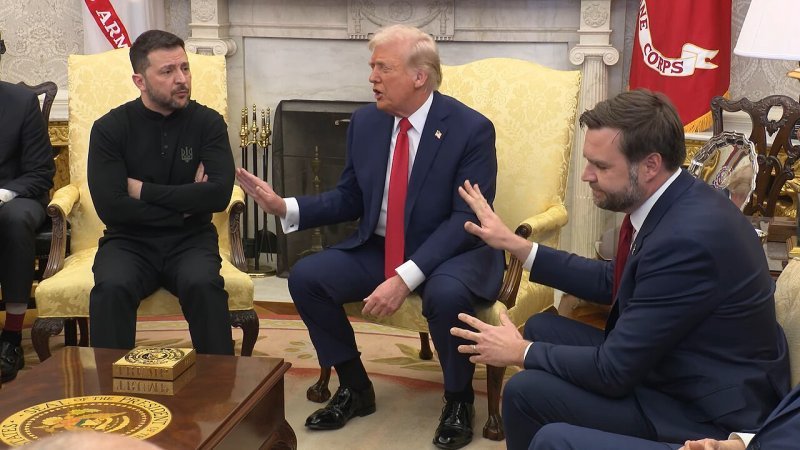
On March the 19th 2025, the Trump Administration released a statement that read like a memorandum. It detailed a telephonic engagement between Trump and Zelensky, with a tone that continued to affirm and emphasise a cordial and respectful engagement between the two presidents. Given the catastrophe that was the previous Oval Office meeting, i.e., the ‘dressing down’ of President Zelensky for the world to see by President Trump and Vice President Vance, the statement, relatively positive, discussed the possibility of a ‘limited ceasefire’ as delegations prepare to meet in Saudi Arabia in the week for renewed talks on the way forward. The Trump administration promised a ceasefire within 24-hours of the president assuming office. Although far-fetched, said promises have not come to fruition, but the ongoing efforts to end all hostilities in a turbulent part of the globe is progress, even if in increments. Let us analyse some of the key highlights in the Administration’s statement and what they entail. The limited ceasefire would focus on the halting of air-strikes by either of the two parties on energy and critical non-military infrastructure, especially aerial bombardment on facilities highly depended upon by a civilian population, e.g., railways, energy depos, dams, medical buildings and so on, as per the Geneva convention’s Article 147 (the Law of Armed Conflict), that both Ukraine and Russia are parties. The partial ceasefire’s commencement was not explicitly discussed, but the Trump Administration expressed urgency in this regard.
Zelensky’s request, however, for Patriot Missile systems in the midst of ceasefire talks may be perceived as somewhat arbitrary, but according to numerous reports, Russia’s continued violation of International Law could be the catalyst behind Zelensky’s double-speak. The Ukrainian president has reiterated that he is open to negotiations that can bring about lasting peace in the region. Moreover, Trump’s engagement with Putin was noted as positive, and the ongoing battle-situation in Kursk is being closely monitored by the US. As all parties gear towards finding a lasting solution, the US’ continued interest in Ukraine’s energy fields and nuclear power plants however has raised a few eyebrows, not only in the US, but in parts of Europe, too. Melina Haring, an expert on Ukrainian matters, while in conversation with Bloomberg, expressed that Trump’s proposal to control Ukraine’s nuclear plants was simply “weird”. One former Ukrainian official added by saying that “anything is possible with the Americans,” but conceded that the proposal was “quite unusual”, and that “the Americans would own it – and on what grounds? It belongs to Ukraine” he said, and asked if the US “planned to purchase it or if it would be taken as a concession”. Pertinent questions, no doubt, as the world waits in anticipation for a swift resolution to the conflict.